
Is It Legal to Download TikTok Videos? Copyright Explained Simply
Downloading TikTok videos sits in a gray zone most articles get wrong. Here is what copyright law and TikTok's terms actually say — in plain English.
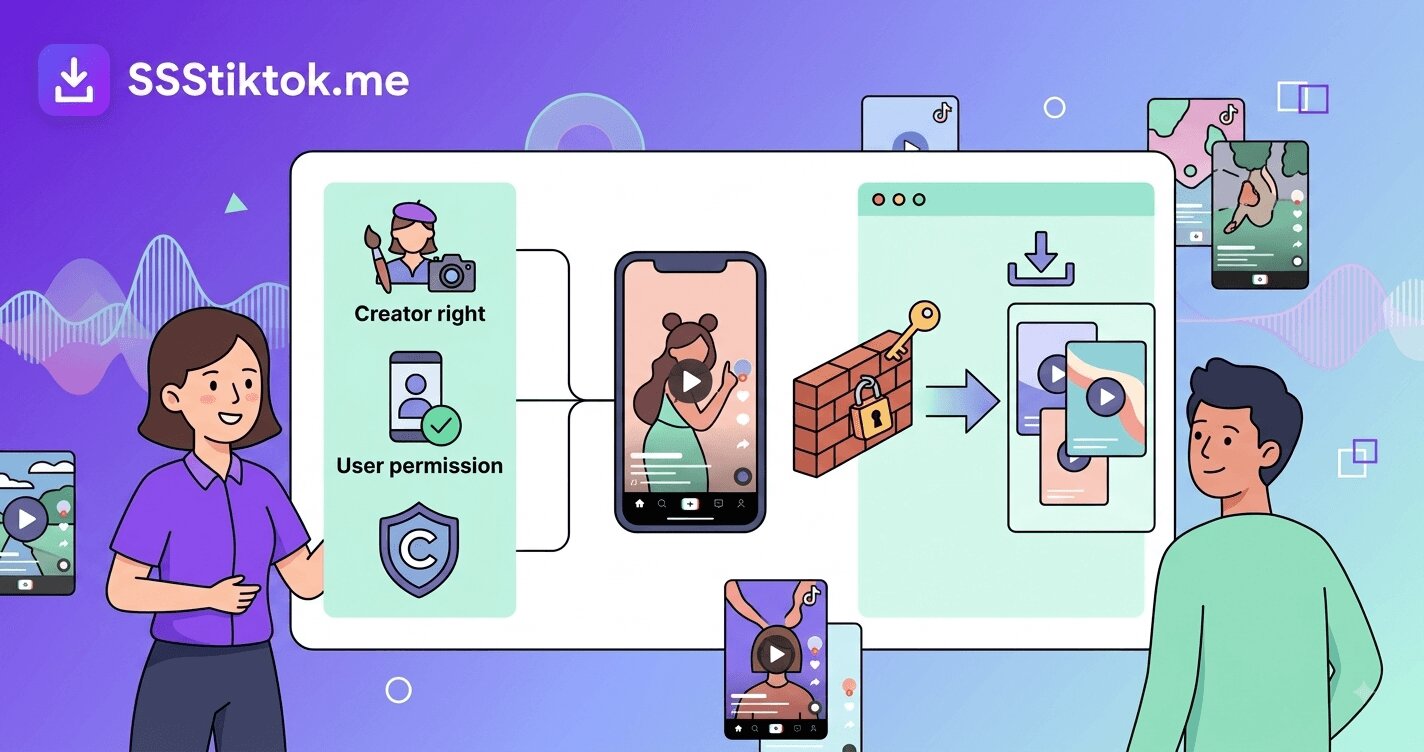 Type this question into any search engine and you will find two kinds of answers: scary ones written to keep you clicking, and dismissive ones written by download sites. Neither tells you how it actually works. So here is the honest, plain-English version of what copyright law and TikTok's own rules say about downloading videos — what is clearly fine, what is clearly not, and where the gray zone really is.
One disclaimer before we start: this is a general explainer, not legal advice. Laws differ between countries, and if you have a genuinely commercial question, a lawyer beats a blog post every time.
The short answer
Downloading a public TikTok video for personal use is a civil gray area that, in practice, affects no one. There is no country where a person has been prosecuted for saving a public social media video to watch offline. The picture changes completely the moment you re-publish, sell, or monetize someone else's video — that is straightforward copyright infringement almost everywhere.
Everything below unpacks that sentence.
Who owns a TikTok video?
The creator does. Uploading to TikTok does not transfer copyright — the creator grants TikTok a license to host and distribute the video, but ownership stays with them. This means three parties have a stake in any video:
- The creator, who owns the footage itself.
- The music rights holder, if the video uses a commercial song — labels license music to TikTok for use inside TikTok, and that license does not follow the video out of the app.
- TikTok, whose terms of service govern how you use the platform.
What TikTok's terms actually say
TikTok's terms of service disallow downloading content except through features TikTok provides (like the built-in Save button, which creators can switch off). Two important nuances:
- Breaking terms of service is not breaking the law. It is a contract issue between you and TikTok. The realistic worst case is action against your TikTok account — it is not a criminal matter, and it does not involve the police, fines, or courts.
- TikTok itself distributes the files. Every video you watch is downloaded to your device to play; downloader tools capture the same public stream the app delivers. That is why enforcement against viewers effectively does not exist.
The spectrum: from clearly fine to clearly illegal
Clearly fine:
- Downloading your own videos — you are the copyright holder. This is the strongest use case, and how many creators back up their content without the watermark.
- Saving videos where the creator explicitly allows it (downloads enabled, or a stated permission).
- Personal offline viewing of public videos — legally gray on paper in some countries, universally tolerated in practice. Several jurisdictions even have private-copy exceptions that arguably cover it.
Gray, be thoughtful:
- Reposting with credit but without asking. Common creator culture, still technically infringement if the owner objects. Asking first costs one comment.
- Using clips under fair use / fair dealing for commentary, criticism, news or education. Real doctrine, but narrower than the internet believes — transformation matters, wholesale re-uploading does not qualify.
Clearly not okay:
- Re-uploading someone's video as your own content — this is what freebooting is, and it can get your account struck or sued.
- Monetizing downloaded videos: compilations, ads, paid placements, courses. Commercial use without a license is the line that gets people in actual legal trouble.
- Using downloaded commercial music outside TikTok in monetized or client work — the song license does not travel with the file. More on that in our MP3 download guide.
- Downloading private or restricted content you were not meant to access.
What about the watermark?
People sometimes assume removing the watermark is itself illegal. The watermark is not a legal seal — it is branding TikTok stamps onto exported copies (see our full explainer on why it exists). Downloading the clean source file, the way SSSTikTok does, is no different in legal terms from downloading the watermarked version. What matters legally is what you do with the video afterward, not whether a logo bounces in the corner. That said, stripping the watermark to pass someone's work off as yours makes an infringement case look worse, because it shows intent to hide the source.
Practical rules of thumb
- Downloading for yourself: relax. Watching offline, archiving, studying editing techniques — nobody is coming for you.
- Reposting: ask the creator, credit them visibly, and take it down if they object.
- Monetizing: get permission in writing, or do not do it.
- Your own content: download freely — it is yours, and keeping backups is just sensible.
- Music: remember song rights are separate from video rights.
Does this apply beyond TikTok?
Almost verbatim, yes — and knowing that makes the principles easier to trust. Every major platform runs the same legal architecture: creators keep copyright, the platform takes a hosting license, the terms of service disallow out-of-band downloading, and enforcement in practice targets commercial re-use rather than personal saving. Downloading an Instagram Reel, a YouTube video or a tweet-embedded clip sits in exactly the gray zone described above, with the same bright line: personal use is tolerated everywhere, monetizing someone else's work is infringement everywhere. The details that do shift between platforms are contractual, not legal — each service's terms differ in wording, and a few (YouTube most prominently) offer official offline features whose existence narrows the argument for third-party tools on that platform. None of that changes the copyright analysis. If you internalize one framework — ownership stays with the creator; your use determines your risk; platforms police accounts, courts police commerce — you can answer this question for any app that exists or will exist, which is more useful than memorizing today's terms of service. And the flip side applies universally too: your own content is yours on every platform, which is why cross-platform creators back up everything without hesitation, TikTok included.
FAQ
Q: Can I get in trouble for downloading a TikTok video?
For personal use, practically no — there are no known cases of an individual facing legal consequences for saving a public video to watch offline. Legal risk begins with re-publishing or monetizing someone else's content.
Q: Is downloading TikTok videos a crime?
No. At most it can conflict with TikTok's terms of service, which is a contract matter between you and the platform, not criminal law. Copyright infringement becomes a serious civil issue mainly when commercial use is involved.
Q: Is it legal to download my own TikTok videos?
Yes, unambiguously. You own the copyright to your videos, and downloading clean copies is the standard way creators keep backups of their work.
Q: Can I repost a downloaded TikTok on Instagram or YouTube?
Reposting someone else's video without permission is technically copyright infringement, even with credit. Ask the creator first — most say yes to a visible credit. Reposting your own videos is of course fine.
Q: Does removing the watermark make it illegal?
No. The watermark has no legal force — legality depends on how you use the video, not on the logo. Downloading a clean file for personal use or for your own content is the normal, accepted practice.
Bottom line: download for yourself with a clear conscience, be generous with credit, and never monetize what you do not own. If you want the clean copy done right, the SSSTikTok downloader takes a link and gives you the watermark-free file in seconds.